
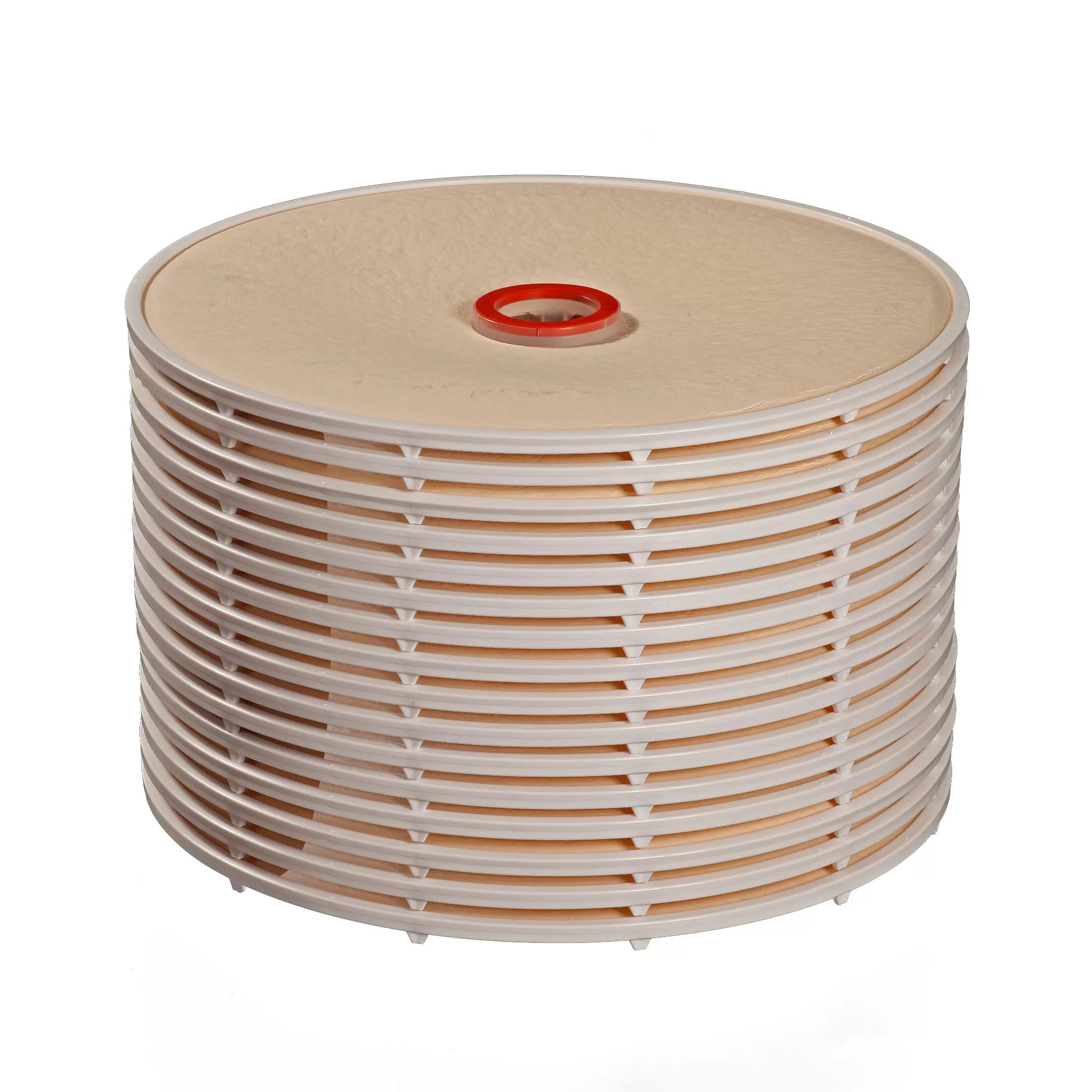
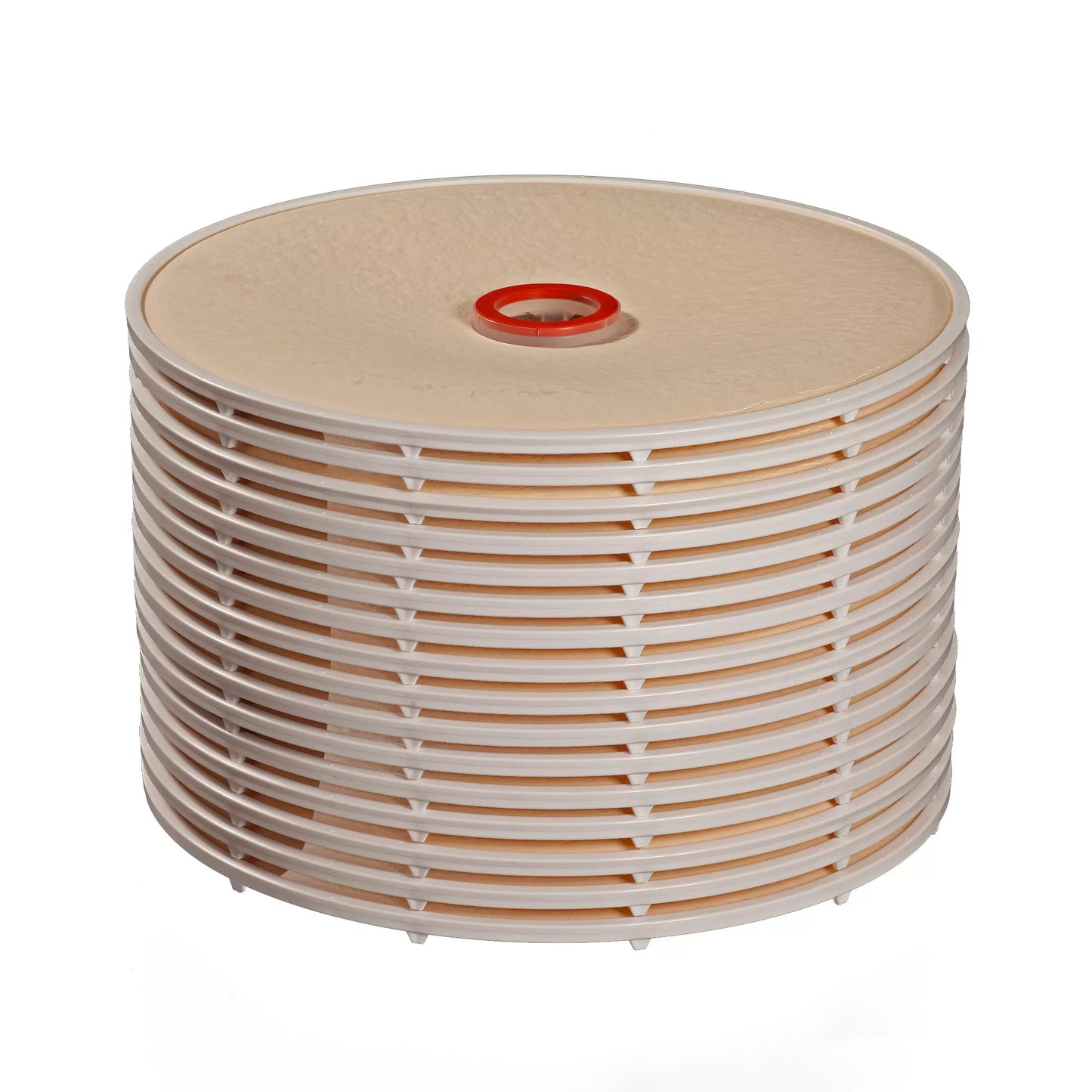

12" Lenticular Filter PAK Module, Cellulose Depth, 5 Micron
ABOUT THIS PART
A 12 inch, 16 cell cellulose depth filter module for any 12 inch lenticular housing that seals on a flat face gasket. $185.00 each in 1 micron or 5 micron, sold one module at a time, from Bend, Oregon.
SPECIFICATIONS
| Diameter | 12 in (30.5 cm) |
|---|---|
| Height | 12 in (30.5 cm) |
| Cells per module | 16 |
| Filter area | 1.8 m2 (19.4 sq ft) |
| Media | Cellulose with wet strength resin and diatomaceous earth |
| Core | Polypropylene |
| Seal | Flat face gasket |
| Micron grades stocked | 1 micron, 5 micron |
| Price | $185.00 each, either grade |
| Sold as | Single module |
| Module weight | approx 13 to 14 lb (5.9 to 6.4 kg) |
| Shipping box | 13 x 13 x 13 in |
| Ships from | Bend, Oregon |
Specification
| Diameter and height | 12 in x 12 in (30.5 cm x 30.5 cm) |
| Cells per module | 16 |
| Filter area | 1.8 m2 (19.4 sq ft) |
| Media | Cellulose with wet strength resin and diatomaceous earth |
| Core | Polypropylene |
| Seal | Flat face gasket |
| Grades stocked | 1 micron, 5 micron |
| Price | $185.00 each, either grade |
| Module weight | About 13 to 14 lb (5.9 to 6.4 kg), shipped in a 13 x 13 x 13 in box |
What it fits
- Any 12 inch lenticular housing that seals on a flat face gasket, GW Kent and ErtelAlsop housings included.
- Does not fit a housing that requires a proprietary molded plastic interlock gasket. Some makers use that interlock to tie a housing to their own consumables.
- Check your housing's center post and seal face before ordering.
- Two modules stack in one housing where the housing and center post are built for two. A single module housing holds one.
Choosing the grade
| Grade | Job |
|---|---|
| 5 micron | The clarifying pass. Takes bulk particulate and haze and does most of the loading work. |
| 1 micron | The polishing pass, run after the 5 micron. |
Most operators stage them, 5 micron first and 1 micron second. Going straight to 1 micron on an unclarified stream blinds the module early and costs you a module you did not need to spend. Both grades are $185.00.
Operating limits
- N.B. Oler does not publish a pressure or temperature figure for this module.
- Comparable 12 inch cellulose lenticular modules from other makers publish 30 to 35 psid (2.1 to 2.4 bar) maximum differential, and 176 F to 180 F (80 C to 82 C) maximum operating temperature.
- Treat 30 psid and 176 F (80 C) as the conservative working limits. Call the shop at 541-330-6409 before running past them.
Where it is used, and ordering
- Post extraction filtration of ethanol in cannabis and hemp processing, downstream of coarse filtration and ahead of solvent recovery.
- Clarification of beer, cider, wine and fruit juice. Same module, both worlds.
- Sold individually in either grade, not in pairs or cases, so you buy the count your run needs.
- Stock is what is on the shelf. The page shows sold out when it runs out.
| FITS | Fits any 12 in lenticular housing that seals on a flat face gasket, including GW Kent and ErtelAlsop 12 in housings. Does not fit housings requiring a proprietary molded plastic interlock gasket. |
|---|
▦ IN YOUR MANUAL
This part appears in the operator manual that ships with your system. The QR code there links to this page.
COMMON QUESTIONS
What housings does this fit?
Any 12 inch lenticular housing that seals on a flat face gasket, including GW Kent and ErtelAlsop housings. It does not fit housings that require a proprietary molded plastic interlock gasket, which some module makers use to tie a housing to their own consumables. If your housing seals on a flat gasket, this module fits.
What is the difference between 1 micron and 5 micron?
5 micron is the clarifying pass, for bulk particulate and haze, and it does most of the loading work. 1 micron is the polishing pass, run after the 5 micron. Most operators stage them, 5 micron first and 1 micron second, because going straight to 1 micron on an unclarified stream blinds the module early.
How much filter area does one module have?
1.8 square meters, 19.4 square feet, from 16 stacked cells in a 12 inch diameter module.
Can I stack two modules in one housing?
Yes, where the housing and center post are built for two. A single module housing holds one.
What is the maximum differential pressure?
N.B. Oler does not publish a figure for this module. Comparable 12 inch cellulose lenticular modules from other makers are published between 30 and 35 psid, 2.1 to 2.4 bar, so 30 psid is the conservative working limit. Call 541-330-6409 before running above it.
What is the maximum operating temperature?
N.B. Oler does not publish a figure for this module. Comparable 12 inch cellulose lenticular modules are published between 176 and 180 degrees F, 80 and 82 degrees C. Treat 176 degrees F, 80 degrees C, as the conservative limit.
What is the module made of?
Cellulose depth filter media with wet strength resin and diatomaceous earth, on a polypropylene core, with a flat face gasket.
Are modules sold individually?
Yes. Either grade is $185.00 for one module. They are not sold in pairs or cases, so you buy the count your run needs.
What is it used for?
Post extraction filtration of ethanol in cannabis and hemp processing, and clarification in beer, cider, wine and fruit juice. It is the same module in both.
How is it packed and how much does it weigh?
A module weighs about 13 to 14 lb, 5.9 to 6.4 kg, and ships in a 13 x 13 x 13 inch box. Shipping is rated at 18 lb to cover packaging.
Where does it ship from?
Bend, Oregon.