What To Expect When You Buy a Hydrocarbon System
What actually happens between signing the order and your first production run.
The short version: our build takes 20 to 26 weeks, and almost nothing that delays a startup is our part of it. The booth, the chiller, the electrical service and the permits run on their own clocks, and the shops that get producing on schedule are the ones that started all of those clocks on the same day.
THE FIVE STAGES
| 1. Quote and order | Prices are published so you can budget, but the order goes out on a written quote, because your configuration, your freight and your room all change what it says. Paid in full before it ships. We do not offer net 30 or purchase order terms. |
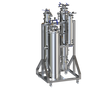
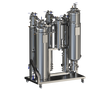
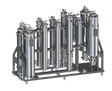
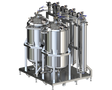
| 2. We build | 20 weeks on a 20 LB system, 26 on a 40 LB Double Barrel. Pressure vessels are welded, hydro tested and stamped in our own shop in Bend, Oregon. |
| 3. You build the room | This is the stage that goes wrong. A C1D1 booth build-out runs up to 12 weeks, a low-temperature chiller 20 or more, a bulk liquid CO2 tank 16 or more. All three start the week you order, not the week the crate lands. |
| 4. Delivery | It arrives assembled, on LTL freight, in one crate. A 20 LB system is about 1,500 lb empty. Unloading, uncrating and rolling it into your rated space is on you, so have a forklift or a dock arranged before the truck is booked. |
| 5. Commissioning and training | We come to you. Three days minimum, five recommended, including a full production run at production pace. Two weeks notice to schedule, and your utilities have to be live before we arrive. |
WHAT IS OURS AND WHAT IS YOURS
| We handle | You handle |
|---|---|
| The machine and every stainless part of it. ASME code stamped pressure vessels. The engineering report and the Certificate of Conformance, serialized to your system with your site seismic calculations. Freight arrangement. Onsite commissioning and operator training with a written exam and certificates. The operators manual and the run log. Answering the phone afterwards. | The C1D1 room or booth, commissioned and interlocked. Chilling, either liquid CO2 or a chiller. Hot water recirculation. A C1D1 rated vacuum pump. Nitrogen. Solvent and biomass on site. Electrical service. Unloading and rigging. Your conversation with your AHJ. Spare gaskets, a second set of sintered filters and an ultrasonic cleaner big enough for them. |
THE THREE THINGS THAT DECIDE HOW THIS GOES
- 01Order the long-lead items the same week you order the system. The booth, the chiller or the bulk tank, and the vacuum pump. Start those clocks late and you will own a finished extractor you cannot legally turn on.
- 02Get your electrician into the room before you order anything. Amperage is the most common late surprise. A chiller wants 480V three phase at 55A or more, and the hot water unit wants 208V at 80A or 480V at 40A.
- 03Talk to your AHJ early and tell us what they ask for. Your local fire marshal or building inspector decides what paperwork you need and what quantity of solvent you may keep in that room. Roughly 98 percent of them want a Certificate of Conformance. We produce it, but we need to know before the build finishes.
READ THE DETAIL
This page is deliberately short. Each of these goes all the way down with real numbers.
- Site Requirements and Utilities. Every utility, sized, plus the pre-delivery checklist we hold you to.
- Lead Times, Published. Ours and the ancillaries, with a week-by-week timeline.
- Training and Operation. Who trains you, how long it takes, and what ships in the crate.
- Certifications and Compliance. What a CoC is, what an ECR is, and which one your inspector wants.
- System Comparison. If you have not settled on a size yet.
What to buy for this
 20 LB closed loop systemAbout 20 weeks to build. Start the room the same week.
 Viton tri-clamp gasketsSpare gaskets, on hand before commissioning.
 Sintered tri-clamp filter discsA second set, so one runs while the other is cleaned.
Need it built to your drawing? Request a quote
Questions on anything here? Call 541-330-6409 during shop hours, Monday to Thursday, 8 to 4 Pacific, or email info@nboler.com. We would rather answer a sizing question now than reschedule a commissioning visit later.